How Often Should You Clean Your Gutters in SLO County?
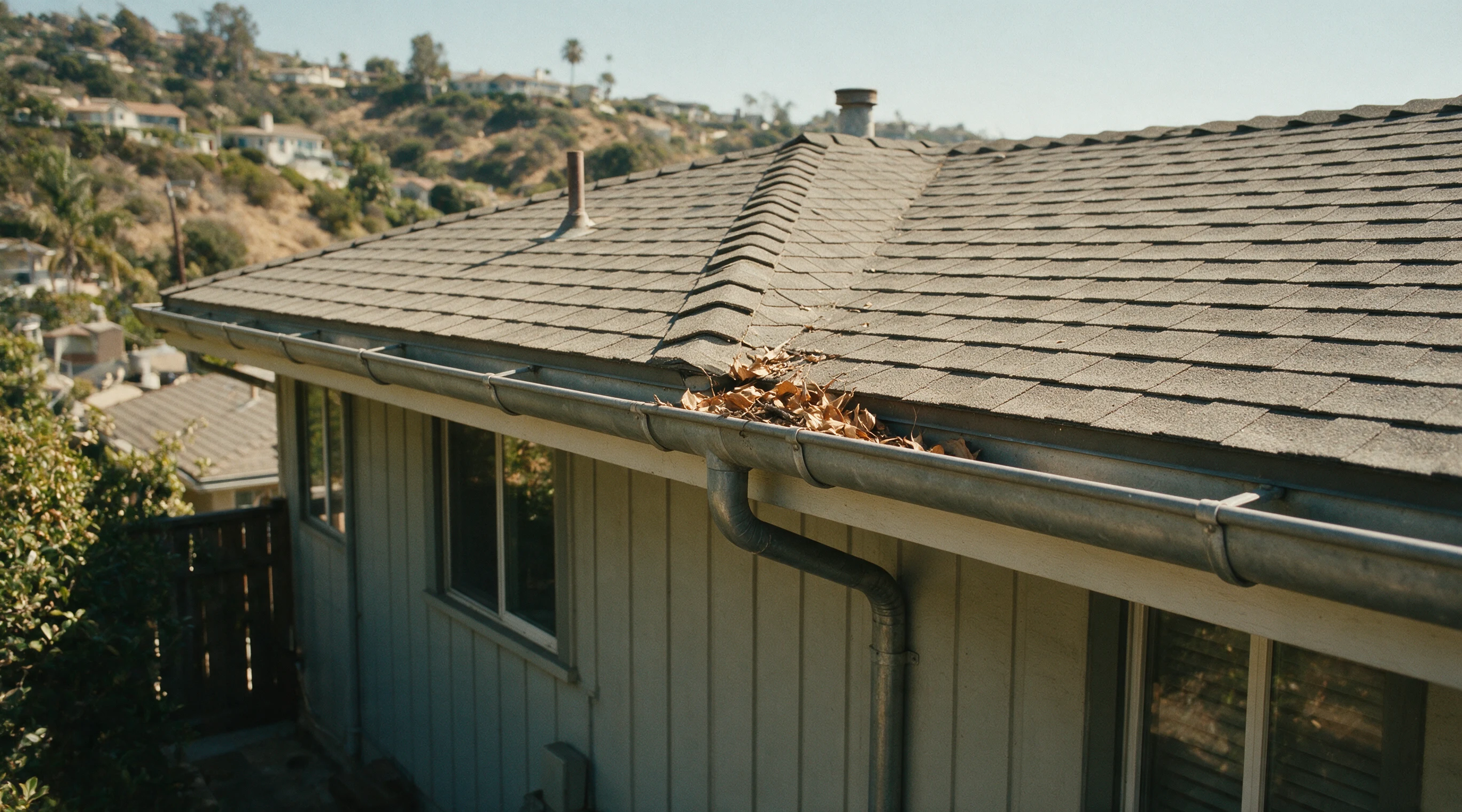
A dark line of leaves packed below one roof valley is a useful gutter signal. If the metal beside it is still visible and the rest of the run looks open, that one collection point may set the next cleaning date.
That is why there is no useful one-size-fits-all answer to how often to clean gutters in SLO County. Spring and fall are sensible checkpoints, but the property gets the final say.
Start With a Checkpoint, Then Adjust
Our residential gutter cleaning page uses spring and fall as a general starting point. It is easy to remember, and it puts one check before wetter weather. It should not become an automatic order for work the house does not need.
A home with no branches near the roof and gutters that stayed clear through the last season may need less attention. Gutters below overhanging branches may need another look after a heavy drop of leaves or needles. Government drainage guidance makes the same adjustment, calling for more frequent cleaning when trees are close to the house.
The last cleaning date matters less than what has collected since then. If one corner fills while the rest stays open, that corner should set the next checkpoint.
Read the Property Before You Pick a Month
Begin with the debris you can see. Broad leaves may collect at a roof valley or downspout opening. Needles can settle into a dense strip that is easy to miss from below. CAL FIRE specifically tells California homeowners to remove dead leaves and pine needles from roofs and gutters as part of defensible-space work.
After a windy spell, compare exposed and sheltered sides from the ground. Check whether one side has collected material while the other still looks open. Do not assume every run filled at the same rate.
Roof layout deserves a look too. Note where roof sections meet, where a valley ends above a gutter, and whether one short section receives water from a larger area. Also count the downspouts you can see and note where they discharge. The U.S. Department of Energy’s building guidance explains that gutter channels collect roof runoff while downspouts carry it to ground level, and that gutter size and downspout provision affect how quickly the system moves water.
This is a useful boundary. Debris calls for cleaning. A clean gutter that still cannot handle ordinary rain may point to a capacity or layout issue instead.
Let Rain Show You What a Dry Check Cannot
You can learn a lot without seeing inside the gutter. Look for streaks or watermarks on the outside face. Check the soil or mulch directly below for a worn line where water has repeatedly fallen. Fairfax County’s soil and water guidance identifies those marks and drip-line erosion as signs that a gutter is overflowing during rain.
During the next normal rain, watch from a safe spot on the ground. Water should enter the gutter, move toward a downspout, and leave at the expected discharge point. If it sheets over one section, note exactly where. If the gutter looks clean yet still spills, the same guidance says spillover can indicate an undersized system. Another cleaning would not answer that problem.
The gutter’s job is water management, not simply looking tidy. Federal building guidance says roof runoff must be carried away from the foundation to limit soil saturation and moisture entering the building. That is enough reason to pay attention without turning every handful of leaves into a disaster story.
Is August Early, Timely, or Unnecessary?
August is timely when you can already see debris, nearby trees have been dropping material, or last season’s rain showed overflow. It is also a practical time to arrange help if the roof edge is difficult to reach. You are dealing with known evidence rather than waiting for the first wet day to confirm it.
August may be early when the main leaf drop has not happened and the gutters currently look open from a safe viewpoint. Put a new checkpoint on the calendar after the nearby trees shed. The date should follow the debris.
Cleaning may be unnecessary right now when the gutters were cleaned recently, no new material is visible, and you already know they carried water properly. Keep the before-rain check. Skip the work until the property gives you a reason.
This is the same approach we use in our article about a recurring exterior cleaning plan. The calendar is a reminder. Conditions decide the work.
Keep the Inspection on the Ground
Use a ground-level view, binoculars, or an upstairs window when those options give you a clear angle. Do not climb just to settle a maintenance question. OSHA’s ladder guidance calls for at least one hand on the ladder and three-point contact while climbing. Looking into a gutter while carrying tools or reaching sideways works against that basic safety boundary.
Our older DIY versus professional gutter cleaning guide covers that choice in more detail. If price is the next question, the honest answer still depends on access and the property. Our gutter cleaning cost article explains why a free estimate is more useful than a made-up number.
If you cannot safely see or reach your gutters, request a free estimate before rain season or call (805) 801-7800.