Green Stuff on Your Driveway? How to Remove Moss and Algae from Concrete
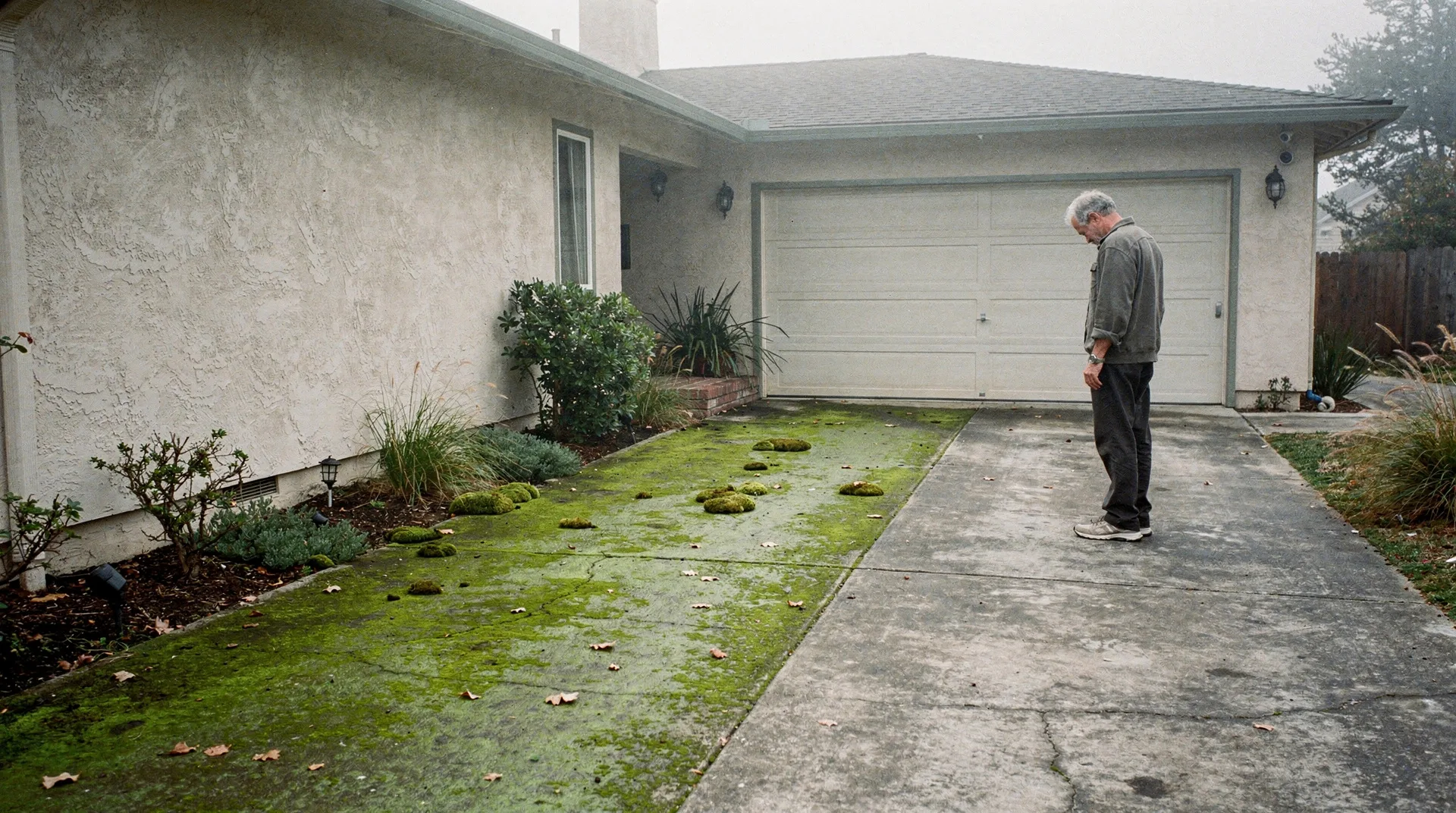
Every coastal driveway has a side the sun forgets. In Los Osos, Morro Bay and Cambria that is usually the north-facing slab, where the marine layer sits until late morning and the house keeps the concrete in shade even after the fog burns off. The green shows up there first: a thin film spreading along the shaded edge, then fuzzy patches gathering in the texture of the pavement.
That green is not dirt and it is not a stain. The film is algae, and the patches are moss. Both need the same two things: shade and moisture. Oregon State's pest specialists describe moist, shady patios and sidewalks as ideal moss territory, and algae as a shade-lover on the same surfaces. Concrete is porous, so a slab that fog keeps damp holds that damp in its pores long after the air dries.
Anywhere in the county, two other things feed the same growth. A sprinkler that mists the pavement every morning does it, and so does tree shade. An overhanging oak in Atascadero does what the marine layer does in Cambria.
What the first rain does to it
Wet moss and algae are slick. Oregon State treats moss on walkways as a slipping hazard and advises removing it from the paths people actually use. It arrives all at once, with the first storm, when rain re-wets a film that has been sitting there since August.
That matters most for the people who cross those paths every day. The CDC reports that falls are the leading cause of injury for adults 65 and older, and that 1 in 4 older adults, more than 14 million people, fall every year.
Rain also undoes the quick fixes. Moss-killing sprays are short acting and wash off with the rainfall. Whatever you treat the slab with has to hold through a whole wet season, and most of what is on a store shelf will not.
What you can honestly do yourself
Small patches are a fair weekend job. Sweep the debris off, scrub with a stiff-bristle brush, rinse. For stubborn spots, diluted household bleach works. OSU Extension's pavement guidance covers the safety rules that matter. Never mix bleach with ammonia or other household cleaners, because the mixture makes poisonous gas. Wear gloves and goggles, and cover nearby plants before you start.
Then aim at the cause, not just the green. Moss is a shade-lover that struggles in full sun, so pruning back whatever overhangs the slab does more than any spray. Keeping sprinklers off the pavement helps too. Do those two things and any cleaning you did lasts far longer.
The honest limit is scale. Oregon State rates scrubbing a patio or walkway as high effort, and scrubbing only takes off what sits on top. A patch by the front step is a fifteen-minute job. A whole driveway on your knees is not, and no part of it is fun.
Where the pressure washer earns its keep
This is the one place we get to say something nice about pressure washing. Concrete is exactly what it is for. Oregon State's guidance calls pressure washing effective for decks, patios and sidewalks. The same page is just as clear about where it does not belong: not on the roof, where it damages shingles.
A rented wand works, with patience. The professional version differs before and after the water. We pre-treat the slab so the growth rooted in the pores dies instead of only bleaching white. A surface cleaner keeps the finish even instead of leaving zebra stripes behind every pass. And the rinse carries the mess to the drain, not into your planting beds.
The house itself is different. Siding, stucco and roofs stay soft-wash-only: low pressure, cleaning solution, no exceptions. High pressure is how paint lifts off and stucco cracks. We covered how to get moss off a roof without wrecking it in last week's post.
Do it while the slab is dry
The work is easiest now, while the concrete is dry and the forecast is still dry. Once the rains arrive the film is slick and the cleanup is harder for everyone.
A single patch is yours to scrub this weekend. A whole driveway, or the patio everyone crosses, is our kind of job. We handle pressure washing for driveways, patios and walkways across San Luis Obispo County. Request a free estimate or call us at (805) 801-7800.